
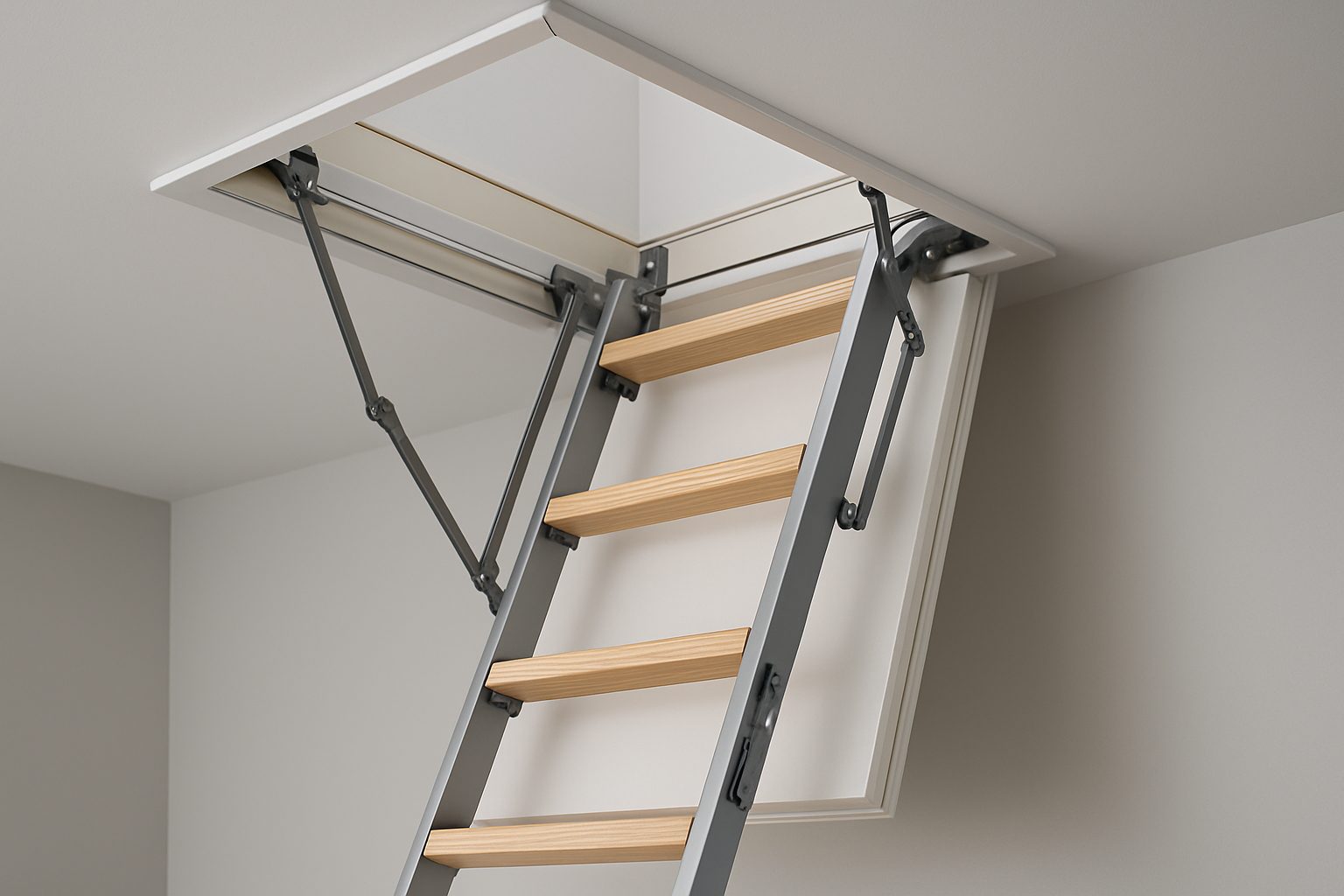
Making better use of available space has become an important part of modern home planning. Loft areas can provide valuable additional capacity for storage and practical household needs, but convenient access is essential. Well-designed loft ladders can create a comfortable route to upper-level space while preserving valuable floor area below. With attention to design, usability, insulation, and installation, homeowners can create an access solution that works naturally with their property.
Contents
- Turning Vertical Space into Practical Space
- Designs That Work with Different Home Layouts
- Comfort Through Thoughtful Step Design
- Efficient Use of Floor Space
- Supporting a Well-Organised Home
- Insulation and Home Comfort
- Quality Construction for Consistent Performance
- Planning Before Installation
- Conclusion
Turning Vertical Space into Practical Space
Loft areas are often among the most underused parts of a home. Their potential can range from seasonal storage to organised household equipment and other belongings that do not need to remain in living areas.
Convenient access changes how this space can be used. When homeowners can reach the loft without difficulty, it becomes easier to arrange possessions into dedicated storage zones and retrieve items when required. This can contribute to a tidier home while increasing the usefulness of the property’s existing footprint.
Designs That Work with Different Home Layouts
No two homes have exactly the same loft configuration. Ceiling height, opening dimensions, floor clearance, and surrounding furniture can all influence the most suitable access design.
Folding systems can be useful in rooms where floor space needs to remain open. Their sections can be stored compactly after use, allowing the area beneath the opening to serve its normal purpose.
Sliding designs offer another practical arrangement, particularly where a controlled movement pattern suits the room. Telescopic options can provide a compact alternative when storage space around the opening is limited.
Comfort Through Thoughtful Step Design
A convenient ladder should support natural movement. Step spacing, tread depth, ladder angle, and hand support all influence how comfortable the journey between the floor and loft feels.
Consistent steps can provide dependable foot placement, while suitable handrails can add support during ascent and descent. These characteristics become particularly valuable when the loft forms part of a regular household routine.
Comfort is therefore not simply an additional feature. It is an important part of creating an access system that homeowners can use with confidence.
Efficient Use of Floor Space
One of the strongest advantages of modern loft access is its ability to preserve room below. Permanent stairs can occupy a substantial area, whereas folding, sliding, and retractable designs can be stored when the loft is not in use.
This can be especially beneficial in smaller properties. Maintaining an open floor area allows the room to remain flexible for furniture, storage, movement, and everyday activities.
Supporting a Well-Organised Home
Better loft access can contribute to improved household organisation. Seasonal decorations, luggage, spare household products, archived possessions, and occasional-use equipment can be grouped in clearly defined areas above.
Using storage containers, shelving, and labelled sections can further improve the arrangement. Easy access makes it more practical to maintain this organisation because belongings can be placed, retrieved, and rearranged without unnecessary difficulty.
Insulation and Home Comfort
The loft opening is also part of the home’s overall thermal structure. A suitable insulated hatch and effective sealing can help create a stronger separation between the loft and the living area.
Combining convenient access with insulation-focused design can support a comfortable indoor environment throughout changing seasons. A well-fitted hatch can also contribute to a neat and finished appearance around the access point.
Quality Construction for Consistent Performance
Durable materials and reliable components can support long-term usability. Strong steps, secure fixings, dependable hinges, and well-designed moving parts all contribute to a positive experience.
Homeowners can also support performance through simple routine care. Periodic inspection of the ladder, hatch, seals, and fittings can help maintain smooth operation and preserve the system’s condition.
Planning Before Installation
Accurate measurements are an important part of selecting the right access solution. The loft opening, ceiling height, available landing area, floor clearance, and direction of ladder movement should all be assessed.
Considering these details in advance can help ensure that the final installation fits comfortably within the home. It also allows homeowners to choose a design that reflects how frequently the loft will be accessed.
Conclusion
Loft ladders can make home access more convenient while helping homeowners unlock the practical potential of unused upper-level space. Modern folding, sliding, and retractable designs can provide flexible options for different property layouts, while comfortable steps, quality construction, insulation, and careful installation add further value. By choosing an access solution based on the home’s dimensions and everyday needs, homeowners can create a more accessible, organised, and efficient living environment.
Quick Summary
- Loft areas are often underused but can serve as valuable storage for seasonal items and other belongings when accessed conveniently.
- Different home layouts require tailored loft access designs, including folding, sliding, and telescopic options that fit specific space constraints.
- Comfort in using loft ladders is influenced by factors such as step spacing, tread depth, ladder angle, and hand support, making usability essential for regular household routines.
- Folding, sliding, and retractable loft access designs preserve floor space below, allowing for flexible use of rooms, particularly in smaller properties.
- A well-insulated loft hatch and effective sealing contribute to thermal efficiency and a comfortable indoor environment by separating the loft from living areas.
- Accurate measurements of the loft opening, ceiling height, and landing area are crucial for selecting the appropriate access solution for a home.